
Wings of liberation: how we built the D-Day missions for X-Plane 12
In the XP-FlightDeck History universe, the Second World War comes as three missions: “Wings of liberation”. Three short flights in X-Plane 12 around Utah Beach, on 6 and 7 June 1944. Here is how they were designed: what comes from the sources, what is imagined, and why.
Aviation history, told in sagas
The History universe follows aviation through three sagas of three episodes: First flights (1903–1916: Kitty Hawk, Blériot, Verdun), Conquering the Atlantic (1927–1932: the Aéropostale, Lindbergh, Amelia Earhart) and Wings of liberation (June 1944). Each saga opens with a Discovery episode, open to everyone, and a story ties the episodes together, from “previously” to “next”.
Why Utah Beach
The landings of 6 June 1944 stretched over five beaches and some 80 km of coast. A ten-minute mission needed a compact place. Utah Beach, the westernmost beach, has it all within a few kilometres: the sea and the landing craft, the dune and its strongpoints, the flooded fields, then the hedgerows and Sainte-Mère-Église. It is also one of the best documented beaches, with a museum built in 1962 on the very spot where the soldiers came ashore.
Starting from the facts
Every history mission starts with research. The facts that shaped the story:
- the US 4th Infantry Division lands at 6:30 am; in the twenty minutes before, some 300 B-26 Marauder medium bombers of the US Ninth Air Force hit the beach defences;
- because of the clouds, the Marauder pilots deliberately come down to between 4,000 and 6,000 feet to see their targets; only two aircraft are lost;
- some 700 German soldiers hold nine strongpoints, 1 to 4 km apart, among them WN5 at La Grande Dune, badly damaged by the bombing;
- pushed by the current, the first landing craft reach the beach nearly 2 km south of the planned spot; General Theodore Roosevelt Jr., the only general to land with a first wave that day, decides to land there;
- behind the beach start the hedgerows. To carry orders, maps and wounded, the US Army uses small liaison aircraft there, the Piper L-4 and the Stinson L-5, nicknamed “grasshoppers”, which land in the meadows.
The scenario: three moments, three ways to fly
We wanted each episode to ask for a different kind of flying, and the three to follow one another like a story, hour by hour.
Episode 1 — D-Day: Utah Beach at dawn (6:15 am)
The Marauders have just passed, but one strongpoint, at the edge of the dune, still holds. Your Stinson L-5 carries a single 45 kg bomb: you come in from the sea, go down to about 500 ft, slowly, and release a little before the bunker. At 500 ft and 75 kt, the bomb lands about 200 m ahead of the aircraft. Then you clear out towards the landing craft. One rule: don’t go below 300 ft, or the aircraft is caught in the blast of its own bomb. This is the saga’s Discovery episode.
Episode 2 — D-Day: the three casemates (6:20 am)
Ten minutes before H-hour, WN5 is still firing. This time you fly the Marauders’ run: along the beach from south to north, you hit three strongpoints, WN4, WN5 then WN7, one bomb for each, while the flak is firing. Keep your speed up, stay above 400 ft and think ahead: at 800 ft and 150 kt, a bomb lands about 500 m ahead of the aircraft.
Episode 3 — Normandy, June 1944 (7 June, 9 am)
The next day, no more bombs: a dispatch to carry. You land the L-5 in a marked meadow near Sainte-Mère-Église (hedgerows all around, orange panels at the corners, a big white T at the threshold, jeeps at the far end), stop within 220 m, wait twenty seconds for the command’s dispatch, take off short between the hedges and bring it back to Utah Beach, below 1,000 ft. The very skill that made the grasshoppers famous.
Recreating 6 June in X-Plane 12
When the mission starts, X-Plane is set up for you: the aircraft, its position, the date and time (dawn on 6 June), and the weather of the day, the one that forced the Marauders down. A layer of stratus around 2,500 ft, a nearly overcast ceiling around 6,500 ft, 9 km visibility, a west-north-westerly wind of 16 kt with gusts and turbulence, and a rough sea with 1.6 m waves.
The scenery is placed in the simulator by the XP-FlightDeck plugin: more than 250 3D objects for the beach alone. About fifty landing craft, transport ships, destroyers and a battleship offshore, barrage balloons, C-47s, P-47s and Spitfires in the sky; on the sand, Rommel’s obstacles at the high and low tide lines, barbed wire, the sea wall, the casemates, 88 mm guns and machine-gun nests. In the hedgerows: hedges, jeeps, an ambulance, a tent, marker panels and a windsock.
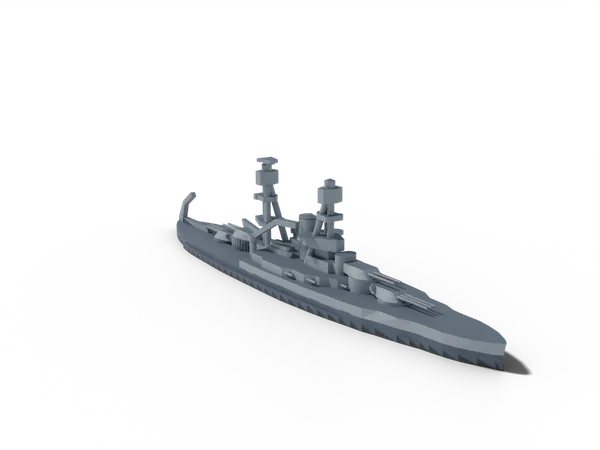
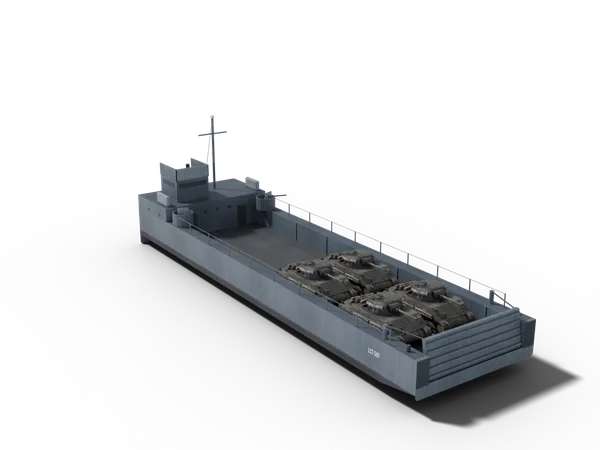
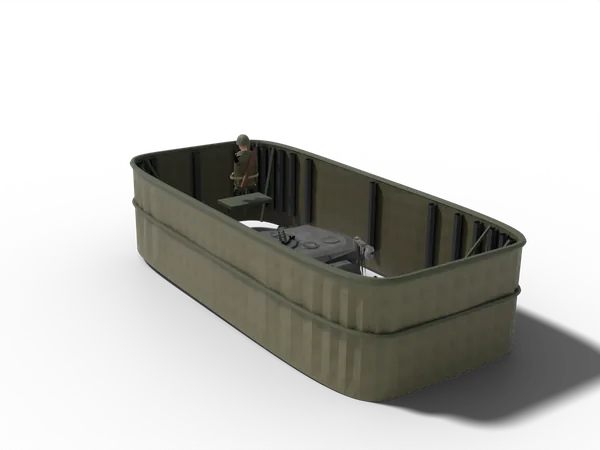
In mid-November 2026 the fleet and the vehicles were remade from scratch, as close as we could get to the period photographs and plans. The battleship USS Nevada now wears the camouflage she had off Utah Beach, Measure 22: navy blue hull up to the deck, haze grey superstructure. The destroyers are Fletcher-class, each LCT carries four Shermans, and the LSTs have their bow doors, their LCVPs in davits and canvas-covered trucks on deck. The DD Shermans swim behind a proper raised canvas screen, and the barrage balloons are the small very low altitude balloons of the 320th battalion. Ashore, the ambulance is a Dodge WC54 and the GMC truck was remodelled part by part. Every piece, pictured: the 3D inventory of the History missions.
With the aircraft that come with X-Plane
Every XP-FlightDeck mission is flown with the aircraft that come with X-Plane 12, so everyone can play them without buying anything else. Things worked out well: the Stinson L-5 Sentinel, shipped with the simulator, really flew in Normandy. More than 3,500 were built; nicknamed the “flying jeep”, it took off and landed in a few dozen metres. For the Marauder, missing from X-Plane, the Beechcraft Baron 58 plays the part: a twin, like the B-26.
What is true, what is imagined
A mission is not a history book, but we say what we made up. The L-5 was an unarmed observation and liaison aircraft: its bomber role in the first episode is imagined, even though some crews did drop grenades. WN4 and WN7 are placed at the spacing given by the sources, not at their exact location. The app says so under each mission’s historical background.
The tone follows the same idea: these missions tell the landings through flying, the precision of a drop, a low flight under the clouds, a short strip between the hedges. No dogfights, no kill count.
To go further
The Utah Beach D-Day Museum, in Sainte-Marie-du-Mont, tells the story of that day on the very spot. And to see how a mission starts in your simulator, read How it works.
The missions in this article
- D-Day: Utah Beach at dawn — Dawn, 6 June 1944: a single bomb, a bunker on the dune, and the landing craft closing in on Utah Beach.
- D-Day: the three casemates — Three casemates on the dune, three bombs, ten minutes before H-hour: the B-26s' run over Utah Beach.
- Normandy, June 1944 — The day after D-Day, a small fabric aircraft slips between the hedgerows to carry a decisive message.